
Since 1908...


THE ORIGINS
Gimont, Gers, 1908.
It all began here. At 6 Place de la Vieille Halle, Joseph and Gabrielle Dubarry settled in the small town of Gimont. She was a passionate charcutier; he was a master tinsmith. Together, they set themselves a daring challenge: to make the best foie gras in the world. This Gascon dream, rooted in the soil of southwestern France, is the starting point of an adventure that has lasted 118 years.

In 1935, Henri Lacroix married Yvette Dubarry and modernized the distribution system with an idea that was revolutionary for the time : mail-order sales.
This was a first in the foie gras industry and an immediate success. Gascon foie gras found its way into homes throughout France. And during World War II, Comtesse du Barry tins accompanied soldiers to the front lines and celebrated their return home.

The Invention That Changes Everything
1954 : Henri Lacroix perfected the process for making foie gras in block; a revolutionary recipe that has remained unchanged ever since. Duck, which until then had been reserved for family meals, found its way onto every dining table. Comtesse du Barry had just written a new chapter in the history of French gastronomy.
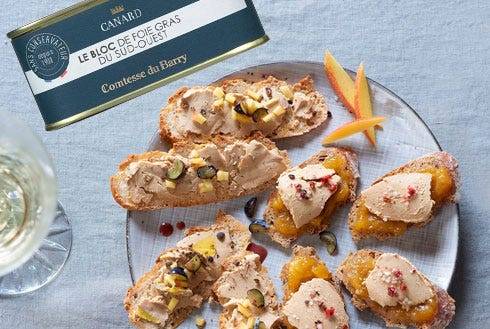
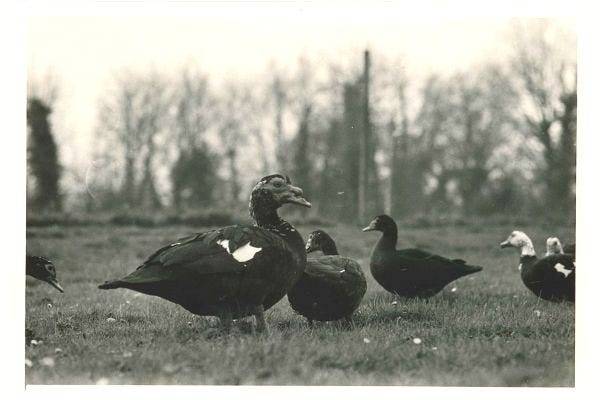
As early as 1949, Yvette Lacroix-Dubarry introduced the first line of fine prepared meals in cans : a first in France. In 1964, with the friendly cooperation of André Daguin, one of the region’s most renowned chefs, Philippe and Francis Lacroix introduced the art of savoring duck breast, which until then had been appreciated only by foie gras merchants. This culinary milestone helped duck farming take off in France—particularly in the Southwest. This new generation propelled the company to a level that enabled it to expand into international markets.
From the Gers to the Atlantis shuttle
In 1997, astronaut Jean-François Clervoy took a selection of Comtesse du Barry products aboard the space shuttle Atlantis.
Our products left Earth for the first time. That same year, Olivier de Kersauzon set out to sail around the world on his trimaran with hundreds of our boxes on board.
Gascon craftsmanship truly knows no bounds.

In 2000 : Luc Bramel, Gabrielle Dubarry’s great-grandson, was appointed CEO and breathed new life into the brand with a third store concept.
In 2010 : French gastronomy was inscribed on UNESCO’s List of Intangible Cultural Heritage—a recognition that reaffirms Comtesse du Barry’s commitment to quality, which has spanned more than a century.

In 2006 : the fourth generation took over. Luc Bramel, Gabrielle Dubarry’s great-grandson, was appointed Managing Director and breathed new life into the company with a third retail concept.
In 2010 : French gastronomy was inscribed on UNESCO’s Intangible Cultural Heritage list — a recognition that reinforces Comtesse du Barry’s commitment to quality, which has spanned more than a century.

THE COUNTESS: A CENTENARIAN AND A DARING WOMAN
In 2016, Comtesse revisited its Michelin-starred past by co-designing an exclusive range for the “Astronautes” exhibition. In 2018, to mark its 110th anniversary, the company unveiled a brand-new foie gras in tribute to Gabrielle Dubarry, the woman who dreamed of making “the best foie gras in the world”.
In 2020, Comtesse entered the ready-to-eat market with its own range of snacks in Paris, and launched the Incomtessetable loyalty programme.
In 2021, the website underwent a makeover with a new visual identity — the digital campaign won third place at the Communication Awards.
In 2023, the company was awarded the Silver Trophy for Best Retail Customer Satisfaction in the delicatessen category.

2026 : a new adventure. The same roots, a new lease of life.
In 2026, a new team of entrepreneurs with deep roots in the South-West – Ariane Daguin, Jérôme Lassus, Jérôme Sarciat and Pascal Lannebère – opened a new chapter in our history.
Their ambition is clear: to preserve the heritage that has built Comtesse du Barry’s reputation, whilst showcasing the riches of Gascony throughout the region.
More than just a gourmet brand, Comtesse du Barry is an invitation to discover a region, its producers, its iconic recipes and that unique way of life which makes every meal a moment of sharing.
Because our roots are not a static legacy. They are a source of inspiration to continue showcasing the very best of the South-West, both today and tomorrow.
